
Alex Tang
Articles
- General
- Theology
- Paul
- Karl Barth
- Spiritual Formation
- Christian Education
- Spiritual Direction
- Spirituality
- Worship
- Church
- Parenting
- Medical
- Bioethics
- Books Reviews
- Videos
- Audios
- PhD dissertation
Spiritual writing
- e-Reflections
- Devotions
- The Abba Ah Beng Chronicles
- Bible Lands
- Conversations with my granddaughter
- Conversations with my grandson
- Poems
- Prayers
Nurturing/ Teaching Courses
- Sermons
- Beginning Christian Life Studies
- The Apostles' Creed
- Child Health and Nutrition
- Biomedical Ethics
- Spiritual Direction
- Spiritual Formation
- Spiritual formation communities
- Retreats
Engaging Culture
- Bioethics
- Glocalisation
- Books and Reading
- A Writing Life
- Star Trek
- Science Fiction
- Comics
- Movies
- Gaming
- Photography
- The End is Near
My Notebook
My blogs
- Spiritual Formation on the Run
- Random Musings from a Doctor's Chair
- Random Sermons from a Doctor's Chair
- Random Writings from a Doctor's Chair
- Random Spirituality from a Doctor's Chair
Books Recommendation
---------------------
Medical Students /Paediatric notes
Practicing the Spiritual Disciplines
Developing Spiritual Habits for our Souls
Dr Alex Tang
When Jesus of Nazareth was asked about the heart of the spiritual life, he summarised the Ten Commandments into “Love the Lord your God with all your heart and with all your soul and with all your mind and with all your strength.’ The second is this: ‘Love your neighbor as yourself.’ There is no commandment greater than these.” (Mark12:30-31). Love God and love your neighbours. That is the essence of our spiritual life or spiritual formation. However loving God and loving our neighbours are not something we do naturally. All of us have problems loving God because of our sinful natures; our rebelliousness against giving up control of our lives to God. All of us are control freaks. We too have problem loving our neighbours because basically we are too self-centred. Behind every ‘good deed of love’ is the question of “what’s it in for me?”
Since it is not natural for us to love God and our neighbours, we need to learn how to do that. The process of learning to love God and loving our neighbours is known as spiritual formation. The process of spiritual formation leads to godliness. We need to reprogram ourselves and develop new spiritual habits. Donald S. Whitney explains in Spiritual Disciplines for the Christian Life, “The spiritual disciplines are the God-given means we are to use in the Spirit-filled pursuit of Godliness.”
Understanding Spiritual Disciplines
Many of us have this concept of spiritual discipline as something only monks or nuns do in monastery or convents and carries such exotic names as lectio divina. And these practices belong to the Roman Catholic Church. That is nothing further from the truth. Spiritual disciplines are the means or practices we use to retrain our souls and develop new habits for our spiritual growth. Richard Foster helps to demystify spiritual disciplines in his now classic book, Celebration of Discipline: The Path to Spiritual growth. There are many different types of spiritual disciplines as each discipline deals with a specific aspect of our spiritual life.
Foster has helpfully categories the various spiritual disciplines into the inward, outward and the corporate disciplines. The inward disciplines include meditation, prayer, fasting and study. When we do our quiet time, we are using some of the spiritual disciplines such as meditation, prayer and study to help us to know God and grow in our spiritual life. The inner disciplines are practices that help us to develop our soul, know God, modify our characters and grow into godliness. The list given by Foster is not exhaustive. There are also the inner disciplines of personal worship, lectio divina (spiritual reading), journaling, meditative prayer, contemplative prayer, centring prayer, spiritual retreat, silent retreat, and many more.
The outward disciplines, according to Foster include simplicity, solitude, submission, and service. The outward disciplines are the practices that help us develop spiritual habits in our living in the world. Simplicity includes simplicity of lifestyles and to be less of a consumer but more protective of our environment. The other outward disciplines not mentioned by Foster include stewardship, social activism, looking after the sick, protecting the weak, a forgiving attitude, and many others. Thus while the inward disciplines help us to develop habits to love God, the outward disciplines help us to love our neighbours.
As Christians, we grow spiritually and develop our spiritual formation in communities of faith. Foster points out there are corporate disciplines which are done in communities such as confession, worship, guidance and celebration. Dorothy Bass writing in Practicing Our Faith includes as corporate disciplines or practices; honoring the body, hospitality, household economics, saying yes and saying no, keeping the Sabbath and testimony. These corporate spiritual disciplines are disciplines that are practiced by the whole church to corporately love God and love our neighbours. Again the list is not exhaustive.
The inward, outward and corporate disciplines are helpful means for us to develop habits that will help us grow into godliness. However, we need to intentionally learn and practice these disciplines. We need to make a conscious decision to want to practice these disciplines.
Circumstantial Spiritual Disciplines
The spiritual disciplines recommended by Richard Foster and others are within our control in the sense that we can decide whether we want to practice them or not. However, there is another group of spiritual discipline, which is not under our control but is given or even forced upon us by God in our life circumstances. Thomas à Kempis writes in The Imitation of Christ, “There is no person on this earth without some trouble or affliction. Who is it then who is most at ease in the midst of suffering? He who is willing to suffer some affliction for God’s sake.”
By no means exhaustive, some of the circumstantial spiritual disciplines are:
Waiting (Ps 130:5-6).We serves a God whose calendar moves by millennia, not minutes, and who thinks in terms of generations, not seasons.
Suffering (Rom 5:3-5).Spiritual growth occurs when we learn to persevere through suffering, responding with biblical hope. Suffering is God’s tool to expose our false belief, and the mess is intended to drive us back to the only sure hope we can have.
Persecution. Everyone who wants to live a godly life in Christ Jesus will be persecuted, (2 Tim. 3:12). Tertullian, a third century theologian observes. “The blood of the martyrs is the seed of the church.”
Social Mercy. (Jer.22:16). Ambrose of Milan wrote, “If thou clothe the naked, thou clothest thyself with righteousness, if thou bring the stranger under thy roof, if thou support the needy, he procures for thee the friendship of saints and eternal habitations. There is no small recompense. Thou sowest earthly things and receive heavenly.”
Mourning. A.W. Tozer noted, “The Bible is written in tears, and to tears it yield its best treasures.” Religious sorrow, mourning, and brokenness of heart are often mentioned in reference to spiritual growth.
Contentment. (Prov. 30:7-9). Gary Thomas comments in Authentic Faith, “Contentment is nothing more than soul rest. It is satisfaction, peace, assurance, and a sense of well-being cultivated by pursuing the right things.”
Sacrifice. Christianity was birthed in sacrifice – Jesus died on the cross, crying out, “My God, my God, why have you forsaken me?” (Mt. 27:46). And He is the model for how life is to be lived. Paul tells us to offer ourselves as living sacrifices (Rom.12:1). On a personal level, sacrifice means this: All of us will eventually come across something we want that is contrary to the will of God. Here is the crossroad of sacrifice: Will we follow our heart, or will we, in childlike faith, surrender and choose to walk in obedience?
Unlike the practices of inward, outward and corporate spiritual disciplines where we have the option to practice them or not, the circumstantial spiritual disciplines are often forced upon us. In some way, the circumstantial spiritual disciplines overlap the inward, outward and corporate spiritual disciples. However, unlike the earlier list, it involves our reaction and response to external circumstances that have been forced upon us. We did not choose the circumstances.
Practicing the Spiritual Disciplines
The list of inward, outward, corporate and circumstantial spiritual disciplines may seem daunting at first. However, if you consider the list carefully, you will soon discover that you will have been practicing at least some of them in your private devotions, reading, small groups and church.
The key to practicing spiritual disciplines is not how you practice them but with whom. The Holy Spirit is the main teacher and the key to the spiritual disciplines. It is the Holy Spirit who will guide and nurture you as you practice the spiritual disciplines. Learn to discern his voice amidst the clamor of other noises that demand your attention.
The spiritual disciplines are meant to be practiced in the context of a Christian faith community. We need to support, encourage and strengthen one another. You will find it easier to learn and practice some disciplines if you are in company of others who are doing the same thing. You may also learn from one another and share new discoveries.
How do you begin? By seeking out and doing one spiritual discipline at a time. Ask the Holy Spirit to help you discern what is most needful in your spiritual life at this moment. Master that particular discipline and only then move on. Seek someone who is experienced in that discipline to teach you. There are also books that offer valuable information.
Conclusion
The spiritual disciplines are practices that help us develop new habits in order that we know God and love our neighbours better. These are habits that help in our process of spiritual formation that leads to godliness. There are some disciplines we can choose to develop while other we are forced by circumstances to practice. The Holy Spirit is our teacher in the spiritual disciplines. Spiritual disciplines are meant to be practiced in the context of Christian faith communities.
Recommended Reading
Foster, Richard. 1978. Celebration of Discipline. New York, NY: HarperCollins.
Whitney, Donald S.1991. Spiritual Disciplines for the Christian Life. Colorado Springs, CO: NavPress.
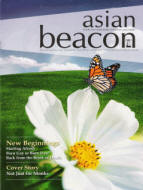
published in Asian Beacon Feb/Mar 2008
download pdf here
